Monday, 14 December 2015

Red Velvet Cake Recipe For Carrot Banana Vanilla Sponge Carrot Fruit Cake photos

Red Velvet Cake Recipe Biography 

Source Link(Google.com.pk)


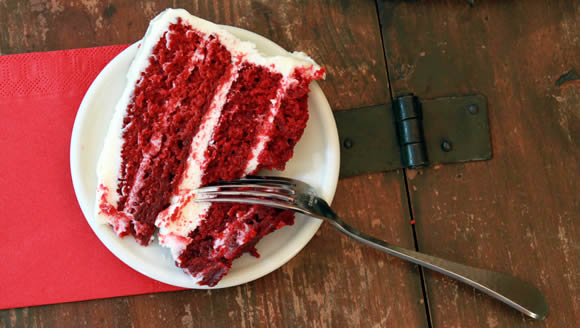
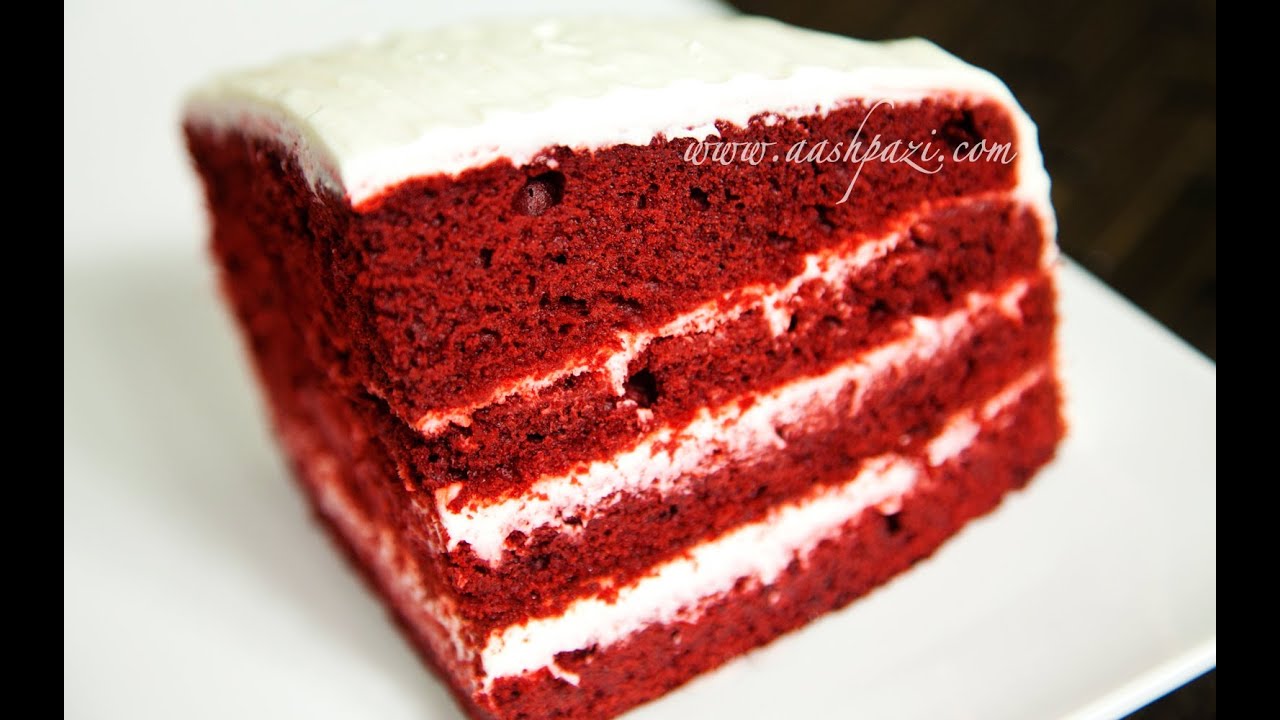
Red Velvet Cake is a form of dessert cake very popular in the American south.

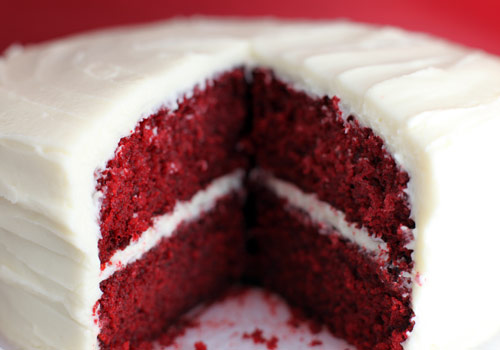
The term is usually taken these days to mean a chocolate cake with a reddish hue to it, covered with cream cheese icing. The oldest recipes we've been able to find, though, use a cooked frosting based on a white sauce of flour and milk.

By today's standards of decadent chocolate cakes, the cake doesn't taste very chocolatey, it just mostly looks it. Most recipes have only a small amount of cocoa in them.

Typical base ingredients include cake flour, eggs, vanilla, and cocoa, with the fat being either oil, shortening or butter. Most recipes use baking soda as the leavener, and either buttermilk or milk and vinegar (or buttermilk *and* vinegar to cover all bets) being the catalyst to start the baking soda reacting. Some recipes may use baking powder as well as the soda.

A final, essential ingredient is the red colouring, which comes either from red food colouring, or from the addition of red beetroot to the recipe. The beets can add moistness to the cake, while the cocoa masks any earthy taste from them.

Occasionally, you may see the name applied to vanilla cakes, no cocoa at all, with red food colouring in them.


Myth: Red Colouring Caused by Reaction Between Cocoa and Baking Soda

Some people, including American food expert James Beard (notably in his book "American Cookery"), have theorized that the red colour comes from the interaction between the cocoa and the baking soda. But none of the basic, natural ingredients in the cake will cause a reaction that causes a red tinge or even a red hue in the cake.

Neither Cocoa, either dutched or undutched, nor even pure grated unsweetened baking chocolate, will interact with baking soda and turn red. Baking soda is an alkaline, needing an acid (thus the buttermilk or milk with vinegar) to cause it to react. Chocolate is not acidic; dutched cocoa borders on alkaline.

You can't even cause a reddish colour by boiling the soda and chocolate together (in fact, the boiling water changes the chemical composition of baking soda, making it even more alkaline.) You will see an initial frothing upon mixing baking soda and cocoa with boiling water, but that is the baking soda reacting to the boiling water, and there will still be no colour change once the frothing dies down and you can see your liquid.

Another theory is that the red is being produced by the interaction of the chocolate with the acid in the vinegar or the buttermilk. This is easily disproved as well. Take cocoa, either dutched or undutched, or take grated unsweetened baking chocolate, and add pure white vinegar, which is a very harsh, acidic vinegar. There is no colour change, even when boiled.

Cocoa contains small amounts of naturally occurring vegetable pigments called "anthocyanins." It is anthocyanins that make blueberries blue, and raspberries red. Anthocyanins are red in the presence of an acid; blue or bluish-green in the presence of an alkaline (base.) If there were enough of the anthocyanins in the cocoa to have any effect strong enough to be visible through the overall brown of the cocoa, the brown of the cocoa plus the bluish-green would in fact turn the cake grey, not red. But there aren't enough anthocyanins in cocoa. 

When cocoa beans are first harvested from their pods, they are cream-coloured, turning purple quickly in the presence of air. This is caused by the anthocyanins in them. Cocoa beans are let sit to ferment for about six days, during which stage most of the anthocyanins in them turn to quinones, which in turn interact with proteins in the beans to produce a brown colour. Any remaining anthocyanins break down and turn brown when exposed to heat.

So, plain and simple, the red colour is caused by -- drumroll here -- the addition of the red food colouring, which has been in the recipe from the very start. 
History Notes

No one knows for sure the origin of Red Velvet Cake. One school of thought attributes its origin to the American South.

Another myth, almost certainly no more than that, applies the same Waldorf Astoria origin as is applied to Devil's Food Cake, cookies, and other desserts: a person in the restaurant there likes the dessert, asks for recipe, and gets it, but accompanied by an eye-popping bill for the recipe.

The myth certainly started early, by 1962:

"Refreshments were provided by Mrs. William Hugo, Mrs. Jack Wickard and Mrs. Jack Wilson, each baking the $300 Waldorf Astoria Red Velvet Cake." [Webb Windsock column, by Wilma Butera. In Big Spring Daily Herald. Big Spring, Texas, USA. 11 February 1962. Page 15.]

"Recipe for Waldorf Red Velvet Cake." [Flanary, Mildred K. "Forte in Lots of Orchids." Independent Press-Telegram. Long Beach, California, USA. 4 March 1962. Page W-B.]

The first recipes we have record of date from summer 1960. References to it include terms such as "new", "unusual", "sensation." The recipe may date back into the late 1950s perhaps, 1958 or 1959, at a time when inexpensive artificial food colourings were firmly established at the supermarkets.
Literature & Lore

"Any time you see a new recipe making the rounds among people whom you consider good cooks, you can be pretty sure it is extra good.... ran across one the other day which is a favorite of Gladys Stroup and she got it from Dorothy Wagerie... they refer to it simply as a red velvet cake... I plan to try it just as soon as quail season sets in, but if you want to make a stab at it now, here is the recipe....

1/2 cup batter
1 1/3 cups sugar
2 eggs
1/4 cup red food coloring
2 tablespoons cocoa
1 cup buttermilk plus 2 tablespoons (buttermilk)
2 1/3 cups cake flour
1/2 teaspoon salt
1 teaspoon vanilla
1 tablespoon vinegar
1 teaspoon soda

Cream shortening and sugar, add eggs. Make a paste of coloring and cocoa; add to creamed mixture. Add buttermilk alternately with flour. Add soda to vinegar and add to mixture. Bake 350 degrees 24 to 30 minutes in two 8-inch pans. (I don't really understand the "24" but that's what the recipe says, so...) Now the frosting....

2 tablespoons flour
1 1/2 cups milk
1 1/2 cups butter
1 1/2 cups sugar
1 1/2 teaspoons vanilla

Cook flour and milk until thick, stirring constantly. Cool well. Cream butter, sugar, and vanilla until very fluffy; add first mixture and mix until consistency of whipped cream.

They offer a few hints.. for instance, take out 2 tablespoons of flour if you don't use cake flour... half the frosting will be enough for 2 layers if you don't care for lots of filling... or you can make it in 3 layers if you like.. or if you get discouraged you can chicken out and go buy a box mix..." -- Thompson, Bette. All Around the Town column. Amarillo Globe-Times. Amarillo, Texas. 27 June 1960. Page 16.

[CooksInfo Editor: Gladys Stroup, a woman rancher; Dorothy Wagerie, assistant cashier, American National Bank of Amarillo]


"Premium Winners at Fair.... Red Velvet Cake, first $3, William E. Baker, 235 Center Street; second, $2, Helen Cordell, Route 2." -- The Frederick Post. Frederick, Maryland, USA. 29 September 1960. Section 2, Page 9.


"Red Velvet Cake: This unusual and interesting cake is highly edible as well as highly decorative. The recipe was given for use in this column by a Mrs C.M. Holmquist, although she said it was given to her by a friend...." -- "Off and On Main Street" Column by L.M. Hays Daily News. Hays, Kansas, USA. 27 February 1961. Page 2.


"NEW RED VELVET CAKE. The Grill Room has baked another cake! A cake so tempting you'll want to try it right away. In appearance, it looks like an ordinary layer cake, smothered in rich butter icing -- but cut into it and there's a surprise! It's red... a rich, melting festive red that will look luscious served with vanilla ice cream. EATON'S new Red Velvet Cake keeps fresh and tasty for days. Try it on your family now -- serve it often! Special, each. 79 cents. No Delivery, Third Floor, South, Dept. 1100k." -- Eaton's Department Store advertisement. In: Winnipeg Free Press. Winnipeg, Manitoba, Canada. 21 June 1961. Page 52.


"RED VELVET CAKE IS A SENSATION: Our mail the past few months has contained daily requests for the new Red Velvet Cake. So we have set to work collecting all the variations and have at last perfected a sensational cake. This cake promises to be as popular as the famous German chocolate cake because it is so beautiful and so easy to make.

VELVET COLOR: The cake is just what the name implies. It has a deep rich red color just like red velvet. The icing is creamy white and when the cake is sliced it is unlike any cake you've ever made. When you serve it, it is certain to be a conversation piece. While the cake is excellent served alone, we think its color and flavor go well with some of the wonderfully good fresh summer fruits. In your friendly supermarket you'll find peaches, apricots, pineapples, bananas, blueberries, melons for making into balls, and many other fruits. Why not serve Red Velvet Cake with fruit to top off a simple summer supper.

RED VELVET CAKE
1 cup shortening
1 1/2 cups granulated sugar
2 eggs
1/4 cup red food color (4 1/2 oz. bottles)
2 1/4 cups sifted all-purpose flour
2 tablespoons cocoa
1 teaspoon salt
1 teaspoon soda
1 cup buttermilk
1 teaspoon vanilla
1 tablespoon vinegar

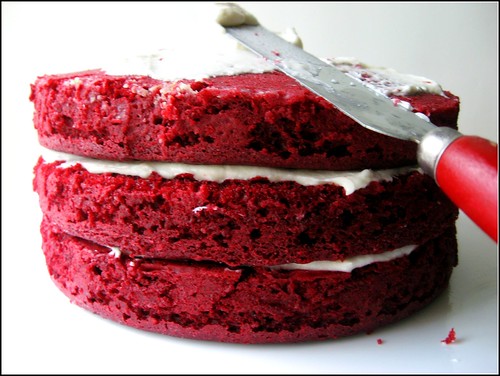
Cream shortening and sugar until very fluffy. Add whole eggs, one at a time. Beat 1 minute after each egg. Very carefully mix in food color. Sift together flour, cocoa, salt, soda. Mix buttermilk, vanilla, vinegar. To creamed ingredients, alternately add dry and liquid ingredients, beginning and ending with flour mixture. Beat on medium speed of mixer after each addition. Turn into 3 8-inch greased and floured round layer pans. Bake in moderate oven, 350 degrees, 35 to 40 minutes. Cool on racks 10 minutes. Remove from pans. When cold, ice as follows:

RED VELVET CAKE FROSTING
1 cup milk
5 tablespoons flour
1 cup butter
1 1/4 cups sifted confectioner's sugar
1 teaspoon vanilla


In glass jar shake together milk and flour until smooth. Cook over medium heat until thickened and smooth, stirring constantly. Cool. Beat together softened butter, sugar and vanilla. Add first mixture. Beat until smooth and fluffy. Mixture looks like whipped cream. Fill and frost cake layers." -- Kitchen Know-How Column by Nancy Carter (based in Atlanta, Georgia.) Appearing in: The Lima News. Lima, Ohio, USA. 30 July 1961. Page B-7.


Red Velvet Cake Recipe for Carrot Banana Vanilla Sponge Carrot Fruit Cake photos

Fairy Cake Recipe For Carrot Banana Vanilla Sponge Carrot Fruit Cake photos

Fairy Cake Recipe Biography

Source Link(Google.com.pk)

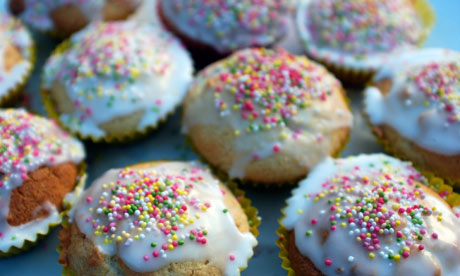
Fairy cakes are not, as their name might imply, themed cakes designed and decorated to the liking of fantasy and sci-fi fans. They are, simply stated, smaller versions of cupcakes. They're widely popular in the UK, and tend not to pile on the icing in the same way that American bakers do with cupcakes. Mich Turner, a British baker and champion of the fairy cake, describes American cupcakes as having "the wrong icing: great wodges of lurid buttercream, rather than the traditional non-fat glace stuff." Conversely, fairy cakes use a lighter glace icing. They also are traditionally made with a lighter sponge cake as opposed to the thicker butter cakes used in cupcakes.

Alternatively, a fairy cake is a type of cupcake with its top cut off and replaced in two pieces, like wings. These are also called butterfly cupcakes.

History
The history of the fairy cake is akin to the history of the cupcake, which first shows up in literature at the end of the 1700s, in "American Cookery," described as "a cake to be baked in small cups." Muffin tins weren't always an available product, so bakers instead baked cupcakes in ramekins or individual pottery cups.

Before the cupcake revolution at the beginning of the century (arguably brought on by Carrie Bradshaw and Magnolia Bakery), the Americans and the British both waxed poetic about their nostalgic longing for the desserts, which were both staples at children's birthday parties. Cupcakes have since become a food for adults as well, especially in America. Nigella Lawson brought the trend to the UK after including a lighter fairy cake recipe in "How To Be A Domestic Goddess."

Etymology

Of course, the petite fairy cakes are named as such because of their size -- small enough to be served to the tiny mythical creatures. The word "fairy" (or "fairie") appeared around 1300, referring to "enchantment" and "magic." We certainly agree that fairy cakes and cupcakes are both enchanting and magical.

Fairy Cakes are the British term for what Americans call cupcakes. A common variant on fairy cakes is butterfly cakes, where the top of the cake is cut out and shaped to look like butterfly wings.

A cake in a mug is a variant that gained popularity on many internet cooking forums and mailing lists. The technique uses a mug as its cooking vessel and can be done in a microwave oven. The recipe often takes fewer than five minutes to prepare.
A cake in a jar is another way of making cupcakes. The baker uses a glass jar instead of muffin tins or cupcake liners.
A butterfly cake is a variant of cupcake,also called fairy cake for its fairy-like "wings".They can be made from any flavor of cake. The top of the fairy cake is cut off or carved out with a spoon, and cut in half. Then, butter cream, whipped cream or other sweet filling (e.g. jam) is spread into the hole. Finally, the two cut halves are stuck into the butter cream to resemble butterfly wings. The wings of the cake are often decorated using icing to form various patterns.
Elaborately frosted cupcakes may be made for special occasions such as baby showers, graduations, or holidays.
A cake ball is an individual portion of cake, round like a chocolate truffle, that is coated in chocolate.These are typically formed from crumbled cake mixed with frosting, rather than being baked as a sphere.
A gourmet cupcake is a somewhat recent variant of cupcake. Gourmet cupcakes are large and filled cupcakes, based around a variety of flavor themes, such as Tiramisu or Cappuccino. In recent years there has been an upcropping of stores that sell only gourmet cupcakes in metropolitan areas.

As an alternative to a plate of individual cakes, some bakers place standard cupcakes into a pattern and frost them to create a large design, such as a basket of flowers or a turtle.

Ingredients
125 grams butter
3/4 cup caster sugar
1 tsp vanilla or lemon extract
2 eggs
2 cups self-raising flour
1/2 cup milk
If you want to make the fairy cakes into butterfly cakes:
1/2 cup jam
1/2 cup cream, whipped
icing sugar to dust with
Procedure

A butterfly cake
Beat the butter, sugar and vanilla or lemon extract until creamy.
Beat in the eggs one at a time.
Fold in the sifted flour alternately with the milk.
Three-quarters fill 18 well-greased paper patty cases or well-greased muffin tins.
Bake at 180°C for 12-15 minutes until well risen and golden. Cool on a cake rack.
If you want to make the fairy cakes into butterfly cakes:
Cut out a small circle in the top of each cake (using a small knife) and cut each circle in half.
Spoon a little jam in the centre hollow and top with whipped cream.
Arrange the "wings" into the cream.

Dust with icing sugar before serving.


Fairy Cake Recipe for Carrot Banana Vanilla Sponge Carrot Fruit Cake photos

Pound Cake Recipe For Carrot Banana Vanilla Sponge Carrot Fruit Cake photos

Pound Cake Recipe Biography

Source Link(google.com.pk)

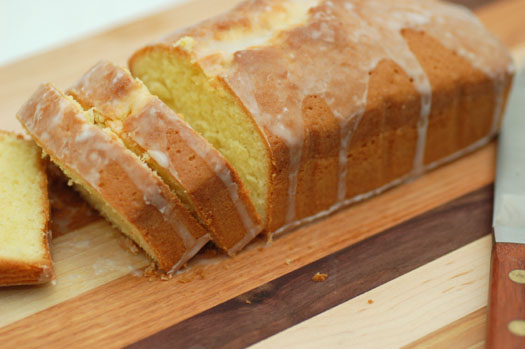
A Pound Cake is a rich, dense cake. It can be plain, or have flavouring extracts or citrus rind added to it. There is no leavener in the cake, just the air whipped into the batter while making it.

A Pound Cake is made from equal portions of butter, egg, sugar and flour. The purest, oldest recipes contain nothing more than that.

The recipe originally contained 1 pound each of butter, eggs, flour and sugar (about 8 large eggs weighing 2 oz each), thus the name "pound." More modern recipes may vary what the "equal portion" is, and / or include baking powder, and some liquid such as milk or alcohol.

In France, Brittany is particularly well-known for its Pound Cake. The French call Pound Cake "Quatre Quarts", which means "four fourths", referring to the equal portions of eggs, flour, sugar and butter. The French version is the same as the English, with even the modern French recipes reaching for baking powder, but in the French mind, there's less emphasis on the pound of each (which would be hard, considering that the French haven't used pounds since the 1780s), but rather equal portions. You start out by weighing how many eggs you are going to use, and then weigh out the same amounts of flour, sugar and butter. For instance, you'd weigh out 2 large eggs, and find that they come to 100 g. So you'd use 100 g each of flour, sugar and butter. (If the eggs weigh something like 95 g or 107 g, you round up or down to the nearest practical number to work with.)

The French versions are more likely to have the egg whites beaten separately. English-speaking cooks tend to add the eggs whole. Both approaches have their positive point and downside: if you separate the eggs and beat the whites separately, you will get a lighter cake, but it will be less moist than a recipe in which the eggs were added whole. Whatever the approach, the eggs should be room temperature before starting so that more air will get into them.

Recipes for Pound Cake or commercially-made Pound Cakes that say "all butter" aren't exactly accurate: if it were all butter, it would just be a block of butter weighing a pound. Obviously, there's other ingredients such as flour in these cakes. What they mean, though, is that for the fat, all butter was used, instead of other commercial fats such as margarine, etc.

In French-speaking parts of the Caribbean, particularly in places such as Martinique and Guadeloupe, Pound Cake with rum added is served on Christmas Eve. Sometimes a mashed, ripe banana is added as well for extra moistness. There, too, as in France, the egg whites will be beaten separately.

In the UK, Pound Cakes tend to be made round. In North America, it is more common to bake them in a loaf pan.
Cooking Tips

To make a Pound Cake, you beat the butter and sugar until they are light and creamy, then add the eggs one at a time and beat them in. Some recipes advise to alternative additions of the egg with additions of the flour; some say do all the egg first, then fold in the flour. Most recipes advise sifting the flour two or three times in advance to introduce air (this step is particularly important if you are using an authentic recipe with no baking powder; less important if you are using a modern recipe that calls for baking powder.) 

The liquid in the recipe is supplied by the eggs. If the batter forms a thin coat on the back of a spoon, you have enough liquid. If it is thicker than that, you can add a bit of water or milk.

The starch in flour stiffens the butter, sugar and egg foam, and some gluten forms, which holds the cake together -- you don't want too much gluten to develop, though, or the cake will turn like bread. For this reason also, flour made from soft wheats is preferred (i.e. cake flour), as it has lower protein content from which to develop gluten.

You fold the flour in because you want to break as few as possible of the bubbles that you've worked hard to form -- the folding also helps avoid developing too much gluten.

You cook at a moderate temperature, then remove from oven and let cool for an hour or so in the pans before turning out onto wire racks. It has to be baked in a moderate oven (about 350 F / 175 C); any hotter and the middle may not get cooked properly, as it is so dense.

Apply with favourite icing while still cooling so the icing melts a bit.

A typical British recipe:

250g (10oz) caster sugar
250g (10oz) room-temperature butter
5 lightly-beaten eggs *
250 g (10oz) self-rising flour
Pinch of salt

Grease 2 x 20cm (8 inch) cake pans; set aside.

Heat oven to 180 C / 350 F.

With an electric mixer, beat together in a large bowl the sugar and the butter until fluffy. Beat the eggs in, then fold in the flour just until all incorporated. Divide mixture evenly between the two greased cake pans, and pop in heated oven until a knife comes out of the cakes clean -- about 25 to 30 minutes. Remove cakes from oven; let stand in cake pans for 10 minutes, then loosen the inside edges and turn out onto wire rack to cool.

* The assumption is that an egg will weigh abut 50g / 2 oz, thus 10 oz of egg 
History Notes

Pound Cake appears to have originated in the 1700s in England. It was written up by Hannah Glasse in her "Art of Cookery" (published 1747.)


By the mid-1800s, Pound Cake recipes started to add liquids, and in the 1900s, baking powder was added to the recipes. And though butter, eggs, flour and sugar are still used, the proportions have been adjusted to make the cake less heavy


Pound Cake Recipe for Carrot Banana Vanilla Sponge Carrot Fruit Cake photos


Birthday Cake Recipes Recipe For Carrot Banana Vanilla Sponge Carrot Fruit Cake photos

Birthday Cake Recipes Biography

Source Link(Google.com.pk)

The birthday cake has been an integral part of the birthday celebrations in western European countries since the middle of the 19th century, which extended to Western culture.Certain rituals and traditions, such as singing of birthday songs, associated with birthday cakes are common to many Western cultures. The Western tradition of adding lit candles to the top of a birthday cake originates in 18th-century Germany. However, the intertwining of cakes and birthday celebrations stretches back to the ancient Romans. The development of the birthday cake has followed the development of culinary and confectionery advancement. While throughout most of Western history, these elaborate cakes in general were the privilege of the wealthy, birthday cakes are nowadays common to most Western birthday celebrations. Around the world many variations of the birthday cake, or rather the birthday pastry and sweets, exist. There is no universal rule about the shape and color of a birthday cake – in recent years for example cakes take the form of animals or have high-quality drawings on them in order to fit the party theme.

In classical Roman culture, 'cakes' of flat rounds made with flour containing nuts, leavened with yeast, and sweetened with honey were occasionally served at special birthdays, but more often at weddings as in Ancient Greece.


In early Europe, the words for cake and bread were virtually interchangeable; the only difference being that cakes were sweet while bread was not. In the 15th century, bakeries in Germany conceived the idea of marketing one-layer cakes for customers' birthdays as well as for only their weddings, and thus the modern birthday cake was born. During the 17th century, the birthday cake took on more or less its contemporary form. However, these elaborate cakes, which possessed many aspects of contemporary cakes (such as multiple layers, icing, and decorations), were only available to the very wealthy. Birthday cakes became more and more proletarianized as a result of the industrial revolution, as materials and tools became more advanced and more accessible.

The cake, or sometimes a pastry or dessert, is served to a person on their birthday. In contemporary Western cultures, the birthday person blows out the candles on the cake after those celebrating have sung the birthday song.


Birthday cake featuring edible miniature birthday party.
The service of a birthday cake is often preceded by the singing of "Happy Birthday to You" in English speaking countries, or an equivalent birthday song in the appropriate language of that country. In fact, the phrase "Happy Birthday" did not appear on birthday cakes until the song "Happy Birthday to You" was popularized in the early 1900s. Variations on birthday song rituals exist. For example, in Uruguay, party guests touch the birthday person's shoulder or head following the singing of "Happy Birthday to You". In Ecuador, sometimes the birthday person will take a large bite off the birthday cake before it is served.


Elaborate birthday cake without candles
The birthday cake is often decorated with small taper candles, secured with special holders or simply pressed down into the cake. In the UK, North America and Australia, the number of candles is equal to the age of the individual whose birthday it is, sometimes with one extra for luck. Traditionally, the birthday person makes a private wish, which will be realized if all the candles are extinguished in a single breath.

In North America, birthday cake is often served with ice cream.


A candle-less birthday cake

To represent a sharing of joy and togetherness, the cake is shared amongst all the guests attending the party. As a courtesy, it reflects one's hospitality and respect for guests.

Variations on the birthday pastry exist outside of Western culture. The Chinese birthday pastry is the shòu bāo (壽包, simp. 寿包) or shòu táo bāo (壽桃包, simp. 寿桃包), a lotus-paste-filled bun made of wheat flour and shaped and colored to resemble a peach. Rather than serving one large pastry, each guest is served their own small sou bao. In Korea, the traditional birthday dish is a seaweed soup. In Western Russia, birthday children are served fruit pies with a birthday greetings carved into the crusts. The Swedish birthday cake is made like a pound cake and is often topped with marzipan and decorated with the national flag. Dutch birthday pastries are fruit tarts topped with whipped cream.


Birthday Cake  Recipes Recipe for Carrot Banana Vanilla Sponge Carrot Fruit Cake photos
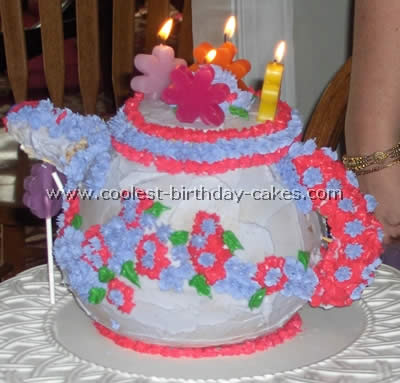

Easy Chocolate Cake Recipe For Carrot Banana Vanilla Sponge Carrot Fruit Cake photos

Easy Chocolate Cake Recipe Biography

Source Link(Google.com.pk)

 A chocolate cake is a cake made with chocolate or cocoa. The ingredients are put into a bowl and mixed together; then the mixed ingredients are put into a cake tin and put in an oven until it is fully cooked. Then the cake is taken out of the oven and placed on a cooling stand. If the cake maker wants to, they can ice the cake, when it has cooled down, by spreading thick icing on it. Chocolate cakes are a sold in shops as well as made at home. They are a sweet food and should not be eaten all the time, which would be unhealthy.

There are many different types of chocolate cake, depending on the recipe and different types of chocolate used. Different countries have different recipes for chocolate cakes. In France, gâteau au chocolate is popular. In Germany, Sachertorte is popular.

In 1828 Conrad Van Houten of the Netherlands made a mechanical extraction method for taking away the fat from cacao liquor resulting in cacao butter and the mostly de-fatted cacao. It was a compacted mass of solids that could be sold as it was "rock cacao" or ground into powder. The processes made chocolate from an luxury to an cheap daily snack. A process for making smoother chocolate called conching was made in 1879 by Swiss Rodolphe and made it easier to bake with chocolate as it "amalgamates smoothly and completely with cake batters." Until 1890 to 1900 chocolate recipes were mostly for drinks. In the U.S., chocolate decadence cakes were popular in the 1980s; in the 1990s, single-serve chocolate cakes with liquid chocolate centers were popular.

This easy chocolate cake recipe is made from simple pantry ingredients and is great for the newbie cook. You just throw all of the ingredients into a bowl and mix!

Ingredients
1 + 1/2 cup (170 g) all-purpose flour
3 tablespoons unsweetened cocoa powder (dutched/dark)
2 teaspoons baking powder
1 cup (220 g) sugar
2 teaspoons vanilla essence
3/4 cup (1.8 dl) milk
3/4 cup (170 g) melted butter
2 eggs

Ingredients for frosting
1 stick (1/2 cup) + 3 tablespoons (160 g) softened butter
3 cups (7.2 dl) powdered sugar or confectioner's sugar
1/2 cup unsweetened cocoa powder
1 1/2 teaspoon vanilla extract

4 to 5 tablespoons lukewarm milk

Method
Preheat oven to 350 deg F (Gas mark 4 or 180 deg C)
Grease a 9 inch (23 cm) cake tin.
Mix flour, cocoa powder, baking powder, sugar and vanilla essence in a bowl.
Melt the butter at low heat and add to the dry ingredients. Also add milk and eggs.
Mix everything together until smooth, either by hand or by using an electric mixer at slow speed.
Transfer to bake tin and bake at 350 degrees until a wooden pick inserted in center comes out clean, approximately 35 to 45 minutes.
After the cake has cooled, slice the cake through the middle to make two layers (easier if the cake has been in the fridge).
Frosting
Cream the softened butter with powdered sugar in a bowl. Add cocoa, vanilla and 4 tablespoons lukewarm milk, and mix until smooth. Do not over-mix. If necessary, add some more milk.
Use one 1/3 of the frosting between the two layers, 1/3 on top, and the rest around the cake.
This cake should have room temperature when served.
Variations
You may cut the top of the cake to make a flat surface before adding the frosting.
You may divide the batter in two and transfer to two bake tins. The baking time would then be about 15-20 minutes
To make a tall cake, you may bake two cakes instead of slicing one into two layers
You may use tasteless vegetable oil for the cake instead of melted butter. If so, also add 1/4 ts salt
Instead of vanilla extract, you may use an equivalent amount of freeze dried coffee (Suggested by Carol, October 2008)

You may use ½ cup of freshly brewed coffee instead of milk or water to get mocca flavor (Suggested by Noreen, January 2009)


Easy Chocolate Cake Recipe for Carrot Banana Vanilla Sponge Carrot Fruit Cake photos